
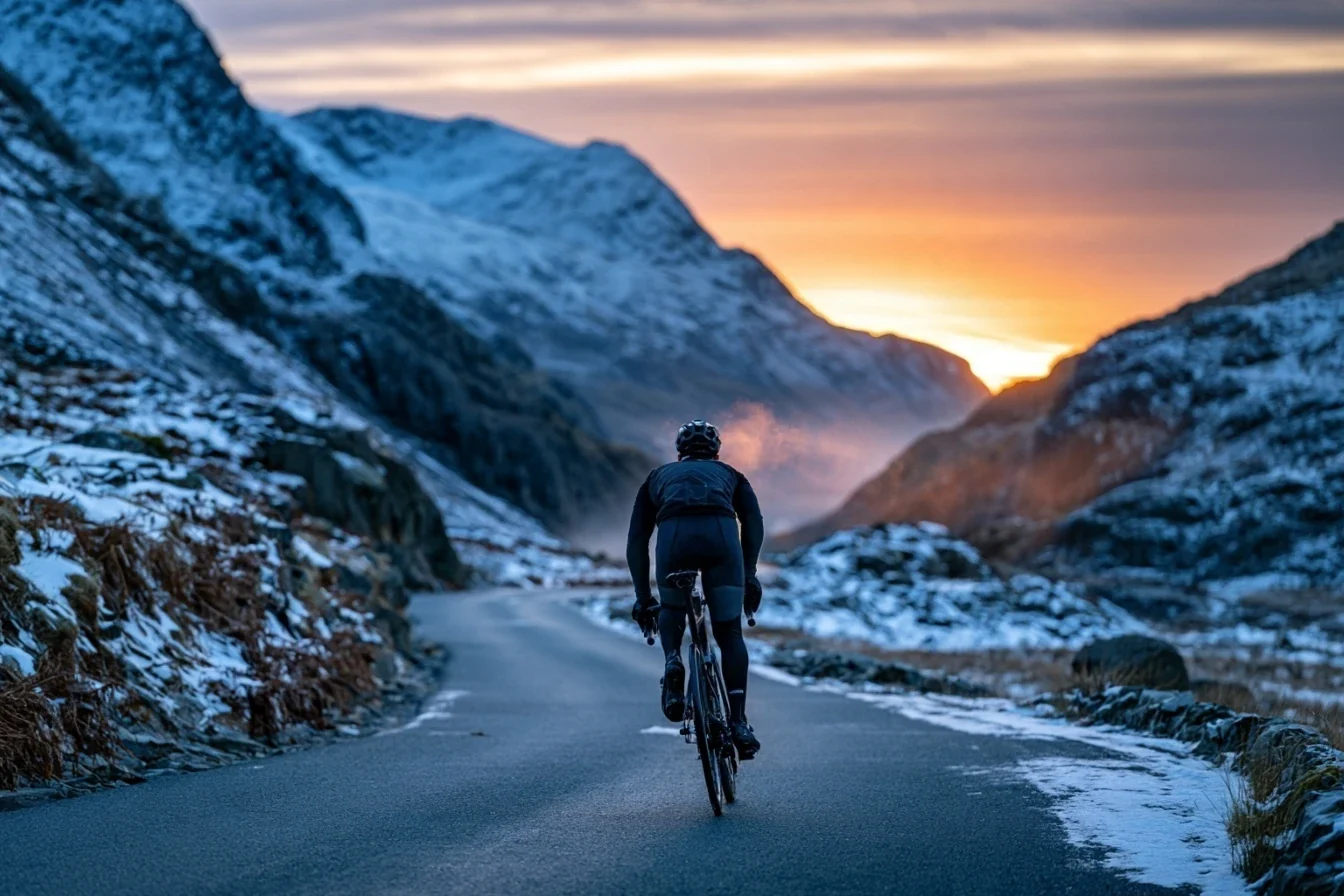
Winter
Training Guide
How to spend the winter so next summer takes care of itself.
Practical winter advice for busy amateur cyclists
Winter is long, and most of the advice about it is either too complicated or quietly trying to sell you something. This guide is neither. It is practical advice for busy amateur cyclists who want to be faster next spring and summer. It is what we tell our own athletes, in plain language, in the order the winter happens.
Chapters
- Why winter decides your seasonThe engine you build by April is the one you race all summer.3 min
- How to lift weights for cyclingTen weeks, four phases, three lifts. And what to do if you can't lift.4 min
- How to build your base with sweet spotWhy it beats zone 2 when you have 6 to 12 hours a week.4 min
- The winter mistakes to avoidFast in February, slow in May. And nine others.3 min
- How to fuel and recoverFuel the work, take the deficit elsewhere, sleep like it matters.3 min
- How to stay consistent when life gets busyTrainer tips, cross training, travel, and getting sick.3 min
- Your winter checklistTick it off. Your progress is saved in this browser.2 min
- How to find people to train withCommunity, group rides, and a partner who expects you to show up.3 min
The guide opens with chapter 1 below. Enter your email on that first screen to read all eight chapters, right here on this page. It stays unlocked on this device.
Why winter decides your season
Learn why the quiet months matter more than any single workout.
Unlock the Winter Training Guide
Enter your email and the whole guide opens right here on this page. No download, no inbox hunt.
- The 10 week lifting plan
- Sweet spot base, week by week
- How to fuel and recover
- A winter checklist that saves your progress
You will also get our free Tuesday training tips. One email a week, unsubscribe any time. We never share your address.


Whatever engine you show up with in April is the engine you race all summer.
Summer form is not made in summer. It is made between now and spring, mostly on days that feel unremarkable. The good stuff takes about 30 weeks, and there is no shortcut through it.
- Winter is for weights and base. Weights first, then a big aerobic engine.
- Hard intervals are a sharpening tool. There is nothing to sharpen yet in December.
- Consistency beats heroics. Hours you can recover from beat big weeks you can't.

Pick three dates, then work backward.
Most riders plan their season in the wrong direction. They start riding in January and hope. Instead, write down three dates and let them set the whole winter.
- The day you want to be fast. Your first goal event or the first group ride that matters.
- The day base starts. Count back 12 to 16 weeks from the start of your interval block.
- The day weights start. Ten weeks before base. For a goal at the start of summer, that is early October.
Easy before hard, in every block.
The order is not arbitrary. Each phase makes the next one work better. Weights first, because everything after them multiplies. Base second, because intensity without base is a house without a foundation.
- Break for two weeks. Not six.
- Foundation for three weeks: easy riding and big gear work to get the legs ready for the gym.
- Weights for ten weeks, then sweet spot base for sixteen.
- Intervals and event prep come last, six weeks each, when there is something to sharpen.
Your winter at a glance
Here is the whole winter on one page. Mid-September to mid-April for a summer goal. Slide everything earlier or later to fit your own dates.
| Phase | Length | What you do | What you are building |
|---|---|---|---|
| Post season break | 2 weeks | No plan. Soul rides, or no rides at all. Eat the cookies. | Motivation. Healed niggles. A reset. |
| Fall foundation | 3 weeks | Easy aerobic riding, mobility, and muscle tension intervals twice a week. | Connective tissue that is ready for the gym. |
| Weight lifting | 10 weeks | Three gym days. Easy rides between. Sprints on the bike in the last four weeks. | Muscle, force, and the nerves to use it. Ten watts or more. |
| Sweet spot base | 16 weeks | Two or three sweet spot days, one long ride, one lift to maintain. Rest week every fourth. | The aerobic engine. Durability. FTP up 5 to 20 percent. |
| Intervals, then event prep | 6 + 6 weeks | Threshold, VO2 max, race specific work. Group rides count now. | Top end speed, sharpened on top of the base. |
When I raced, my best summers all started the same way: squats in October, sweet spot through the dark months, and no racing until the plan said so. By the time the group ride got fast in March, the engine was already built.Frank Overton FasCat founder, former Cat 1 racer, invented sweet spot training in 2005

How to lift weights for cycling
Ten weeks, four phases, three lifts. Learn what to do if you can't get to a gym.
Ten weeks in the gym is worth ten watts, and more by spring.
Cycling is a non impact sport, so the gym is one of the few places you load your bones. After 40 the fast twitch muscle goes first, and lifting is how you get it back. Masters riders have the most to reclaim.
- Typical gain: 10 or more watts from lifting alone, then 15 to 50 by spring once the base is built.
- You don't need a circuit. You need heavy, targeted work on the muscles that drive the pedals.
- Strength that stays in the weight room doesn't win bike races. The last four weeks move it to the pedals.

Three lifts. Learn the squat first.
Spend the first three weeks on technique with light weight. Then add load. Stop piling on weight once the sessions feel easy and recover better instead. Honor the rest days.
- Squat is the main lift. Leg press loads the same muscles more safely as the percentages climb. Leg curl protects the knees.
- Ride easy between gym days. Thirty minutes of zone 2 before and after a session is plenty.
- Keep hard efforts and heavy lifting on different days. From 50 on, never back to back.
FasCat
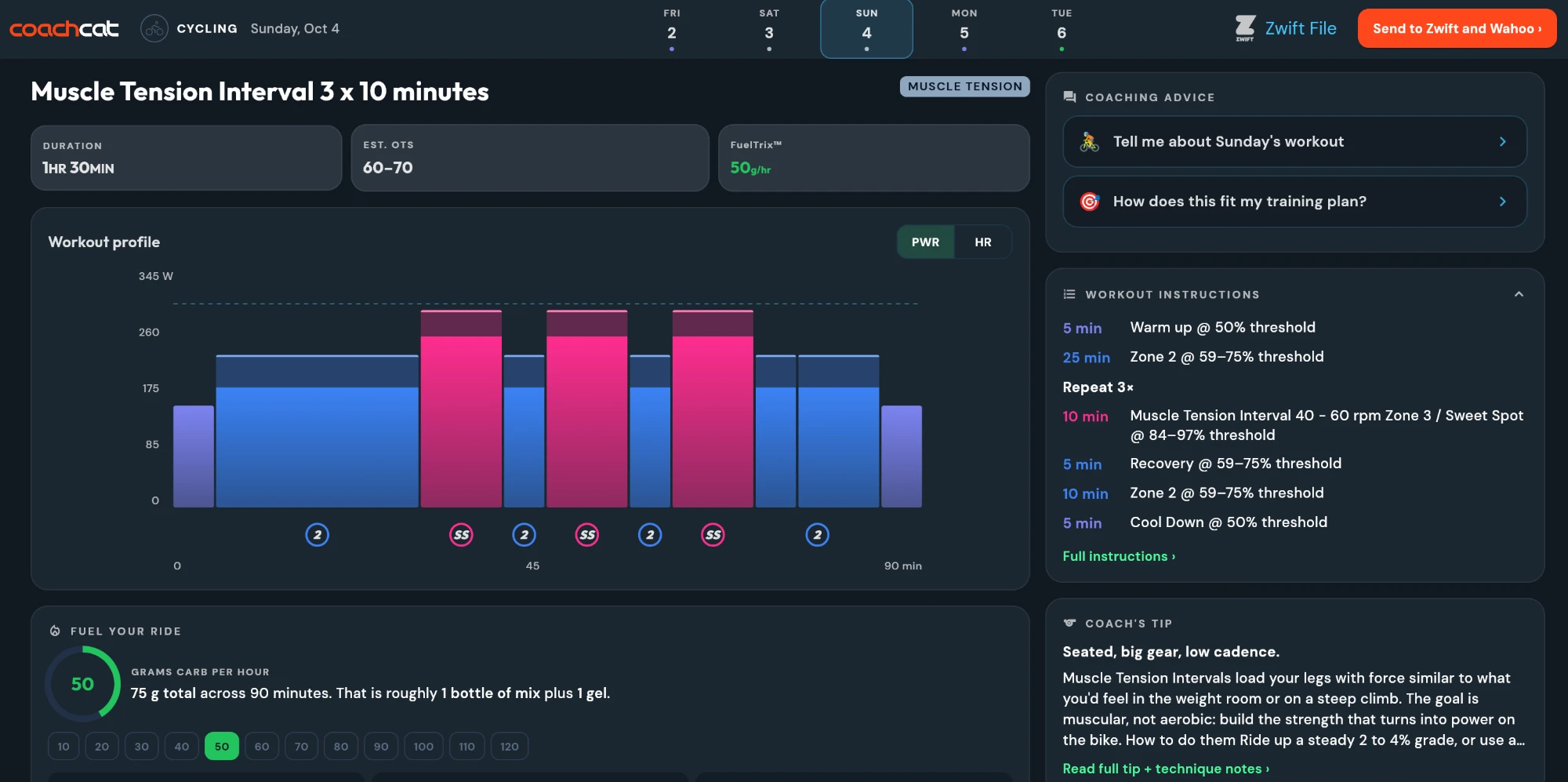
Lift on the bike instead: muscle tension intervals.
No gym, bad knees, or just no appetite for it? Big gear, low cadence efforts work like weights on the bike. Seated, 40 to 60 rpm, on a steady 2 to 4 percent grade or the trainer. The big gear supplies the torque, so don't turn them into a threshold effort.
- Start with 2 × 5 minutes. Build to 3 × 10, then 20 minutes steady. Twice a week in the off season.
- Minimal equipment at home: two kettlebells and a rack covers goblet squats, split squats, single leg deadlifts and swings.
- Injured? Skip the gym block, do 16 weeks of sweet spot, and keep the muscle tension intervals.
Muscle tension intervals, 3 × 10
The lifting plan on one page
Estimate a one rep max in week three, after you have learned the movement, and set every load from it. Think of it the way you use FTP for zones.
Watch: Coach Frank walks through the ten week lifting plan, phase by phase. Loads only when you tap play.
| Phase | Weeks | Sets × reps | Load | On the bike |
|---|---|---|---|---|
| Adaptation | 1–3 | 4 × 8 | Light. Technique first, no lingering soreness. | Easy rides. Muscle tension intervals once or twice a week. |
| Hypertrophy | 4–5 | 6 × 8–12 | 65 to 75% of max, add about 5% per set. | Easy rides. Expect 1 to 4 pounds of new muscle. |
| Strength | 6–7 | 4 × 6 or fewer | 70 to 100% of max. Two or three rest days between. | Neuromuscular sprints: short, all out, legs should feel gelatinous after. |
| Power | 8–9 | 4 × 6, max speed | 45 to 60% of max, moved as fast as possible. Jump squats. | Standing start sprints from near standstill. |
| Recovery weeks | fill to 10 | – | Rest weeks are where the strength shows up. | Easy riding. |
| Week | Intervals | Recovery | Total |
|---|---|---|---|
| 1 | 3 × 7 min | 3.5 min | 21 min |
| 2 | 3 × 10 min | 5 min | 30 min |
| 3 | 4 × 8 min | 4 min | 32 min |
| 4 | 5 × 9 min | 4.5 min | 45 min |
| 5 | 4 × 10 min | 5 min | 40 min |
Learn what to do when a gym is not an option
- At home with two kettlebells: goblet squats, Bulgarian split squats, single leg deadlifts, kettlebell swings, step ups. Same four phases, same sets and reps, slower load progression.
- Hotel or travel: split squats, step ups onto a chair, single leg glute bridges, wall sits. Thirty minutes keeps the adaptation alive.
- Knee history: leg press instead of squats, and skip the jump squats. Use a Smith machine or a trainer for the power phase.
- Can't lift at all: 16 weeks of sweet spot with muscle tension intervals twice a week. You will still be faster in spring.
As a pro, my off season was a few weeks of mountain bikes and trail runs, then the gym three days a week. I was never the biggest rider, but by February I had a punch that six months of riding could not give me.Allie Legg FasCat coach, six years as a World Tour pro, raced two World Championships
How to build your base with sweet spot
Learn why it beats zone 2 when you have 6 to 12 hours a week, and how to do it.
Sweet spot is 84 to 97 percent of your FTP.
It sits between a high zone 2 and a low zone 4. Medium hard. You can speak in short sentences but you would rather not. It is the point where you get the most fitness for the least strain, which is why we named it the sweet spot twenty years ago.
- By power: 84 to 97% of FTP, from a 20 minute field test.
- By heart rate: 84 to 97% of threshold heart rate.
- By feel: medium hard, steady, sustainable for about an hour if you had to.

Zone 2 works. It just needs more hours than you have.
Zone 2 is the right tool for someone training 20 hours a week. With 6 to 12 hours, sweet spot gives you more adaptation per hour: more mitochondria, more plasma volume, more fatigue resistance, and an FTP that climbs through the winter.
- It is not a debate. Sweet spot builds the base. Polarized training is for when racing gets close.
- Expect FTP up 5 to 20 percent over a full base, and you will just feel faster.
- Durability comes with it. The last hour of a ride stops being the worst hour.
What each zone builds
Darker means a bigger training effect. Sweet spot lands near the top of the aerobic list, in sessions short enough for a weeknight.
| Z130 to 90 min | Z21 to 6 hr | Z31 to 4 hr | SS0.5 to 3 hr | Z48 to 30 min | Z53 to 6 min | Z75 to 15 s | |
|---|---|---|---|---|---|---|---|
| Plasma volume | small | small | moderate | moderate to large | large | very large | small |
| Mitochondrial enzymes | small | moderate | large | large to very large | very large | moderate | small |
| Lactate threshold | small | moderate | large | large to very large | very large | moderate | small |
| Muscle glycogen storage | small | moderate | very large | large to very large | large | moderate | small |
| Slow twitch muscle growth | small | small | moderate | moderate | moderate | large | small |
| Capillaries in the muscle | small | small | moderate | moderate | moderate | large | small |
| Fast twitch fibers turned aerobic | small | moderate | large | large | large | moderate | small |
| Stroke volume and cardiac output | small | small | moderate | moderate to large | large | very large | small |
| VO2 max | small | small | moderate | moderate to large | large | very large | small |
| Sprint energy stores | small | small | small | none listed | small | small | moderate |
| Lactate tolerance | small | small | small | none listed | small | small | small |
| Fast twitch muscle growth | small | small | small | none listed | small | small | moderate |
| Neuromuscular power | small | small | small | none listed | small | small | large |
Two or three days a week, for sixteen weeks.
Start with 2 × 10 minutes and add about 15 minutes of sweet spot a week. Hold even power across every interval rather than starting hard and fading. Three weeks on, one week easy, then repeat with a little more.
- Weekdays: one hour on the trainer, two or three days. Indoors there is no coasting, so you can trim the interval time.
- Weekend: one long ride where the sweet spot is unstructured. Hills, a group, or a Zwift club ride.
- Field test at the start, after week 8 at the end of a rest week, and at the end.
Two key days midweek. One long ride on Saturday.
Tuesday and Wednesday are the structured sweet spot workouts, an hour each, and they are the workouts that build the engine. Thursday is zone 2. Saturday is the long sweet spot ride, loose and unstructured. Sunday is a shorter zone 2 spin. Monday and Friday are off.
- Protect Tuesday, Wednesday and Saturday. If life takes a day, let it take Thursday or Sunday.
- Saturday is where the hours go: hills, a group ride, or a Zwift club ride. Keep the effort sweet spot, not race pace.
- Sunday is easy on purpose. Conversational. Finish wanting more.
How to start sweet spot this week
You do not need a plan to begin. You need an FTP or a threshold heart rate, two weekday hours, and a weekend ride. Here is the first five weeks.
Watch: The original sweet spot versus zone 2 explainer, our most watched video.
| Week | Weekday workout (×2 or ×3) | Sweet spot per workout |
|---|---|---|
| 1 | 2 × 10 min, 5 min easy between | 20 min |
| 2 | 2 × 15 min | 30 min |
| 3 | 3 × 12 min | 36 min |
| 4 | Easy week. 1 × 20 min, or nothing structured | 20 min |
| 5 and on | 2 × 20 min, then longer intervals and group rides | 40 to 60+ min |
| Day | Ride | Time | Notes |
|---|---|---|---|
| Monday | Off | – | Rest days are training days. |
| Tuesday | Sweet spot, key workout | 1:00 | Structured intervals on the trainer or a steady road. Fuel it. |
| Wednesday | Sweet spot, key workout | 1:00 | Second structured day. Even pacing across every interval. One lift this week to maintain strength. |
| Thursday | Zone 2 | 1:00 | Easy and conversational. Muscle tension intervals can live here. |
| Friday | Off | – | Or 30 minutes easy if the legs want it. |
| Saturday | Long sweet spot endurance ride | 2:30–3:00 | Unstructured. Hills, a group ride, or a Zwift club ride. |
| Sunday | Zone 2, shorter | 1:30 | Finish wanting more. |
Learn to sweet spot by feel
No power meter? No problem. Sweet spot is a feeling before it is a number. Breathing is deep and rhythmic. You can say a short sentence but not tell a story. Your legs are working but not burning. If you could hold it for about an hour at a push, you are in the zone. If you could chat freely, go a little harder. If you are counting the seconds, back off.
Racing out of Michigan meant my winters were on the trainer. Tuesday and Thursday sweet spot, an hour each, and a long one on Saturday. I do the exact same thing now on Zwift, early, before the kids are up. The engine does not care where you build it.Jake Rytlewski FasCat coach, former pro road racer, 6th at US Pro criterium championships
The winter mistakes to avoid
Learn the ten ways riders waste a winter, starting with the biggest one.
Don't be fast in February and slow in May.
Hard intervals in December feel productive. They spend fitness rather than build it. Riders who start VO2 work in winter peak early, get stale, and fade by the time the events they care about arrive.
- Intervals are a sharpening tool. Six to eight weeks before the goal is early enough.
- Sweet spot is as hard as winter needs to be. It is not easy. It is just not all out.
- If you crave intensity, do the short sprints that come with the gym block. They sharpen the nerves, not the fatigue.
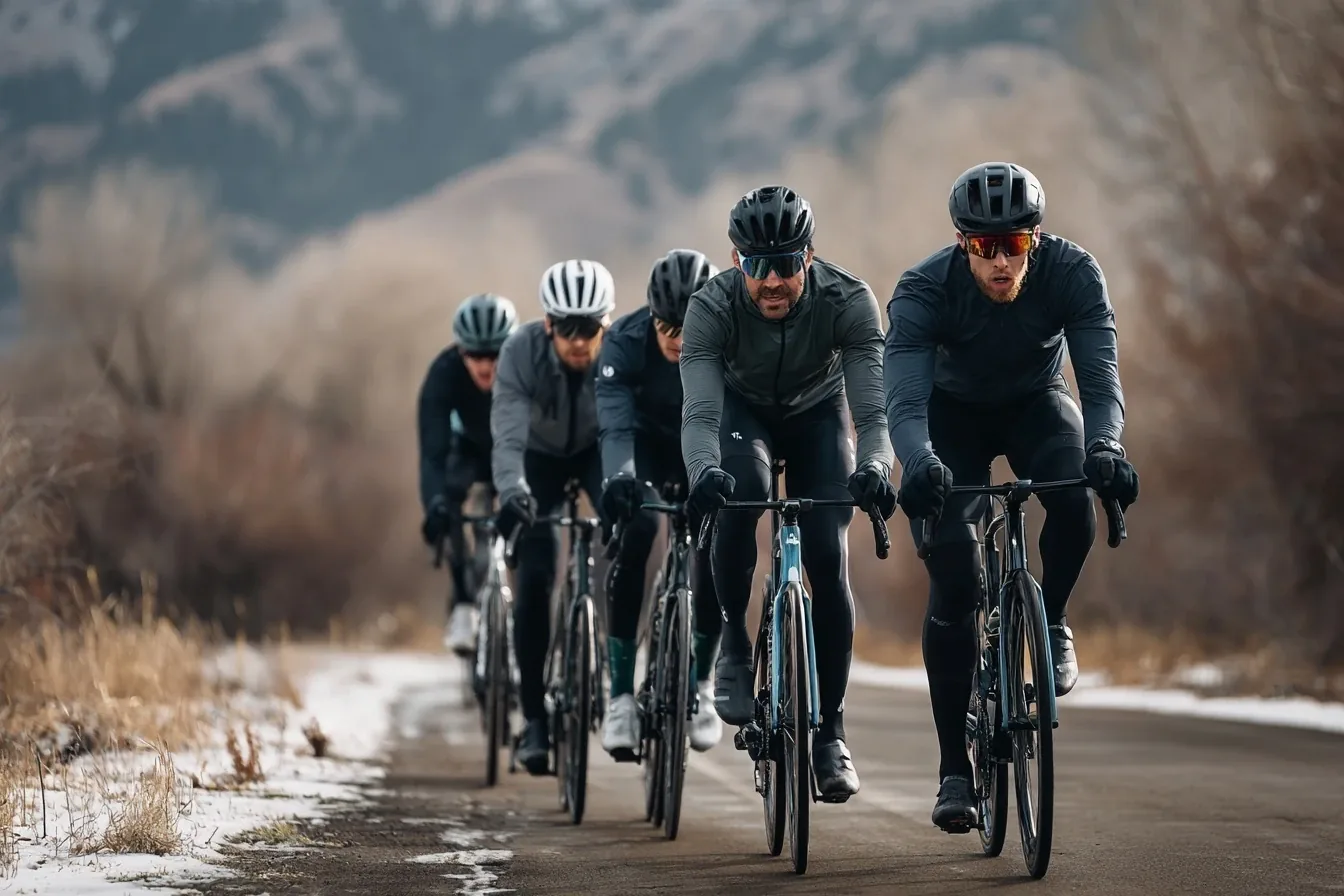
Don't be the group ride hero.
That power file is what a hero's Saturday looks like: every zone, no structure, and a week of fatigue for very little fitness. In winter, ride the group ride as a long sweet spot ride. Sit in, keep it steady, and let someone else win the sign sprint.
- The fall foundation exists so you are not the group ride hero eight weeks before your season.
- Use the group for time, not intensity. Three hours of company beats one hour of showing off.
- Save the attacks for April. Nobody remembers who won in January.
The rest are smaller, but they add up.
A six week break. Skipping the break. Quitting the gym after the hypertrophy phase. Crash dieting in January. Each one quietly gives back some of the winter you worked for.
- Take two weeks off, not six. Six weeks costs you roughly a twelve week swing to get back.
- Do not lower your FTP for the trainer. You have one FTP. Fix the fan and the setup instead.
- Do not go low carb on hard days. Fat loss comes from easy days, not from starving the work.
Ten winter mistakes and what to do instead
Print this one. Most of these are mistakes of enthusiasm, which is the best kind to have, pointed in the wrong direction.
| Mistake | Why it hurts | Do this instead |
|---|---|---|
| Hard intervals in December | Spends fitness you have not built. Peak in February, fade in May. | Weights and sweet spot until 6 to 8 weeks before the goal. |
| Group ride hero | A week of fatigue for an hour of ego. | Ride it as a long sweet spot ride. Sit in. |
| A six week break | Creates about a twelve week swing to get back to where you were. | Two weeks. Three or four only after a very long season. |
| Skipping the break | Type A riders crack 8 to 12 weeks into the plan. | Take it. Soul rides, or no rides at all. |
| Stopping the gym after week five | Bigger legs, same FTP. The strength never reaches the pedals. | Finish the strength and power phases, with the sprints. |
| Crash dieting in January | Lost power, poor sleep, illness. Cutting too deep has a name: REDs. | 300 to 500 kcal a day, taken on easy days only. |
| Low carb on hard days | Fewer adaptations and worse workouts. Fat loss does not depend on fuel burned during a ride. | Fuel the ride, take the deficit elsewhere. |
| Lowering FTP for the trainer | You train below your real zones for four months. | Fan, cooling, setup, music. Keep the number. |
| Big weeks, then nothing | Fitness is lost faster than it is gained. | Consistent 6 to 10 hours you can recover from. |
| Ignoring a niggle | One bad decision turns a two day issue into a six week layoff. | Speak up, pause before pushing, reassess daily. |
My best seasons started with the most boring winters. No racing, no group ride heroics, two sweet spot days a week and a long ride on the weekend. The years I got excited in January were the years I was cooked by summer.Ricky Arnopol FasCat coach, former pro, yellow jersey at Redlands and the Tour of the Gila
How to fuel and recover through the winter
Learn to fuel the work, lose weight without losing watts, and sleep like it matters.
Fuel the ride. Take the deficit everywhere else.
Winter is the right time to lose weight if you have weight to lose. The trick is where the deficit comes from. Under eating on the bike does not burn extra fat in any way that matters. It just makes the workout worse.
- On the bike, 1 kilojoule of work is roughly 1 calorie of food. Eat for the work you are doing.
- Off the bike, a 300 to 500 calorie deficit on easy and rest days. About half a pound to a pound a week.
- Hard days stay near maintenance. Never low carb on a sweet spot day.
Protein at every meal, especially after you lift.
The gym block only works if you feed it. Spread protein across the day rather than loading it into dinner. Winning in the kitchen begins with winning in the grocery store: what you buy is what you eat.
- Protein: 1.6 to 2.2 grams per kilo of body weight a day, in three or four servings.
- Go fast foods: fish, chicken, beans, lentils, rice, sweet potato, oats, greens, olive oil. Water is your beverage.
- Go slow foods: added sugar, fried food, ultra processed snacks, alcohol. Not never. Just not most days.

Sleep is the recovery tool. Everything else is a gadget.
Sleep, nutrition and a sensible plan are 80 to 90 percent of recovery. After 40 the hard day that cleared in one night now takes two. Plan for that instead of fighting it.
- Eight hours, at a consistent time. Dinner three to four hours before bed.
- Alcohol is the number one cause of a low HRV. Try a week without and watch the seven day trend.
- Cut sets before you cut intensity, and pull up before you are fully cooked. Fresher is faster.
The fueling numbers worth remembering
You do not need to count everything. You need to match carbohydrate to the day, hit a protein floor, and keep the deficit, if there is one, away from the work.
| Ride | Carbs per hour | Looks like |
|---|---|---|
| Recovery spin, under an hour | 0 g | Water. |
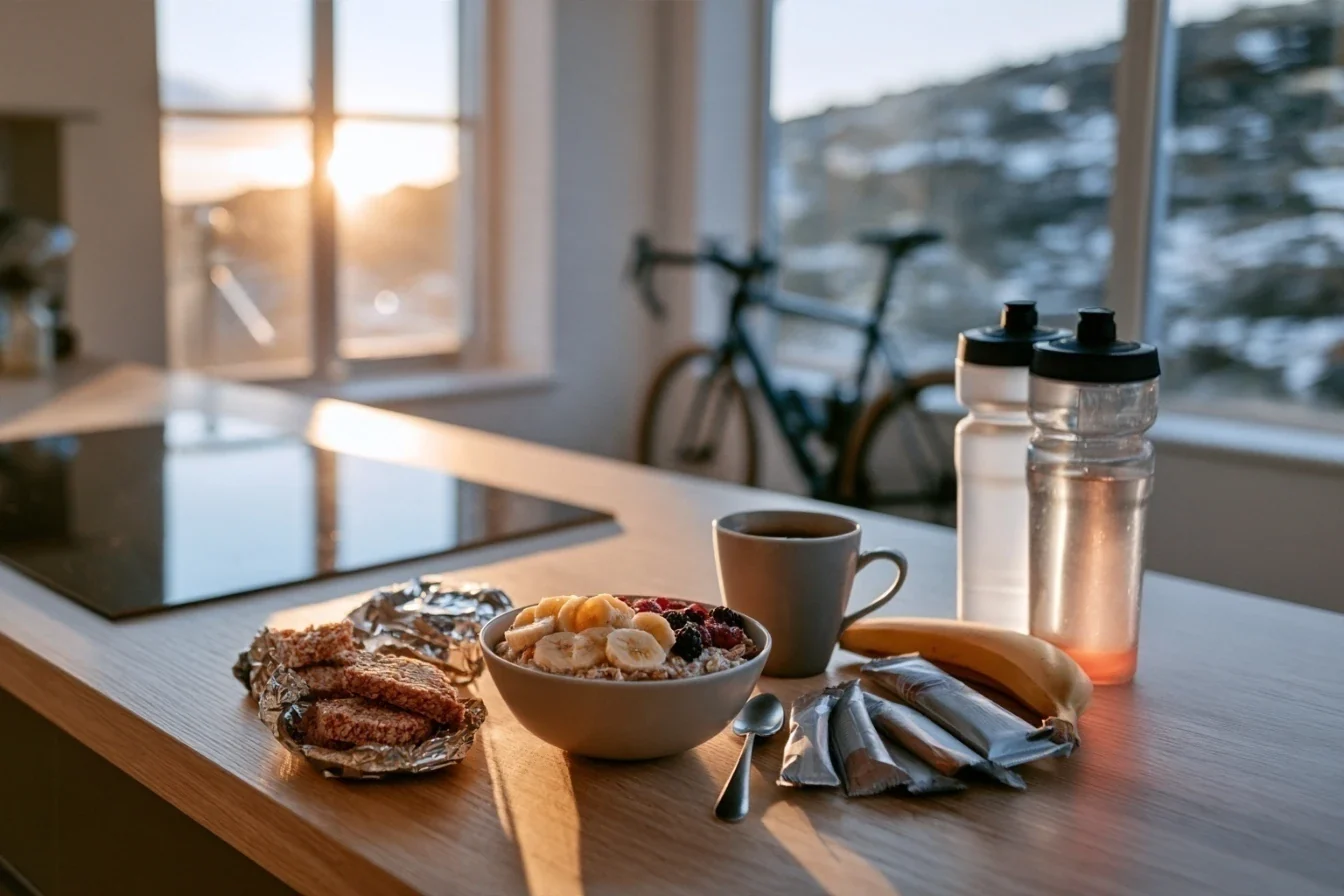
| 90 minute endurance ride | 30 g | A bottle of mix, or a banana and a bar. |
| Weekday sweet spot, 60 to 90 min | 40 to 60 g | A bottle of mix plus a gel. |
| 2.5 hours with hard intervals | 80 g | Two bottles of mix and a gel an hour. |
| 4 hour race or big day | 100 to 120 g | Mix, gels and real food, practiced in training. |
| Day type | Carbs | Calories |
|---|---|---|
| Hard day (sweet spot, lifting) | High | Near maintenance. Fuel the work. |
| Endurance day | Moderate | Smaller dinner. Small deficit. |
| Rest or recovery day | Lower | Most of the week's deficit lives here. |
Learn the masters recovery rules
- Protein: 1.6 to 2.2 g per kg a day, with a serving after hard rides and after lifting. Older muscle needs a bigger dose to respond.
- Sleep: 8 or more hours. It is the single biggest lever and the cheapest.
- Rest days: a day on either side of your hardest sessions. From 50 on, never lift heavy and sprint on consecutive days.
- Adaptation takes longer: what took six weeks at 30 takes eight to twelve at 50. Give the plan time to work.
- Recovery gadgets: fine, but they rank well below sleep, food and plan design.
How to stay consistent when life gets busy
Trainer tips, cross training, travel, and what to do when you get sick.
The trainer rewards short, dense sessions. The road rewards time.
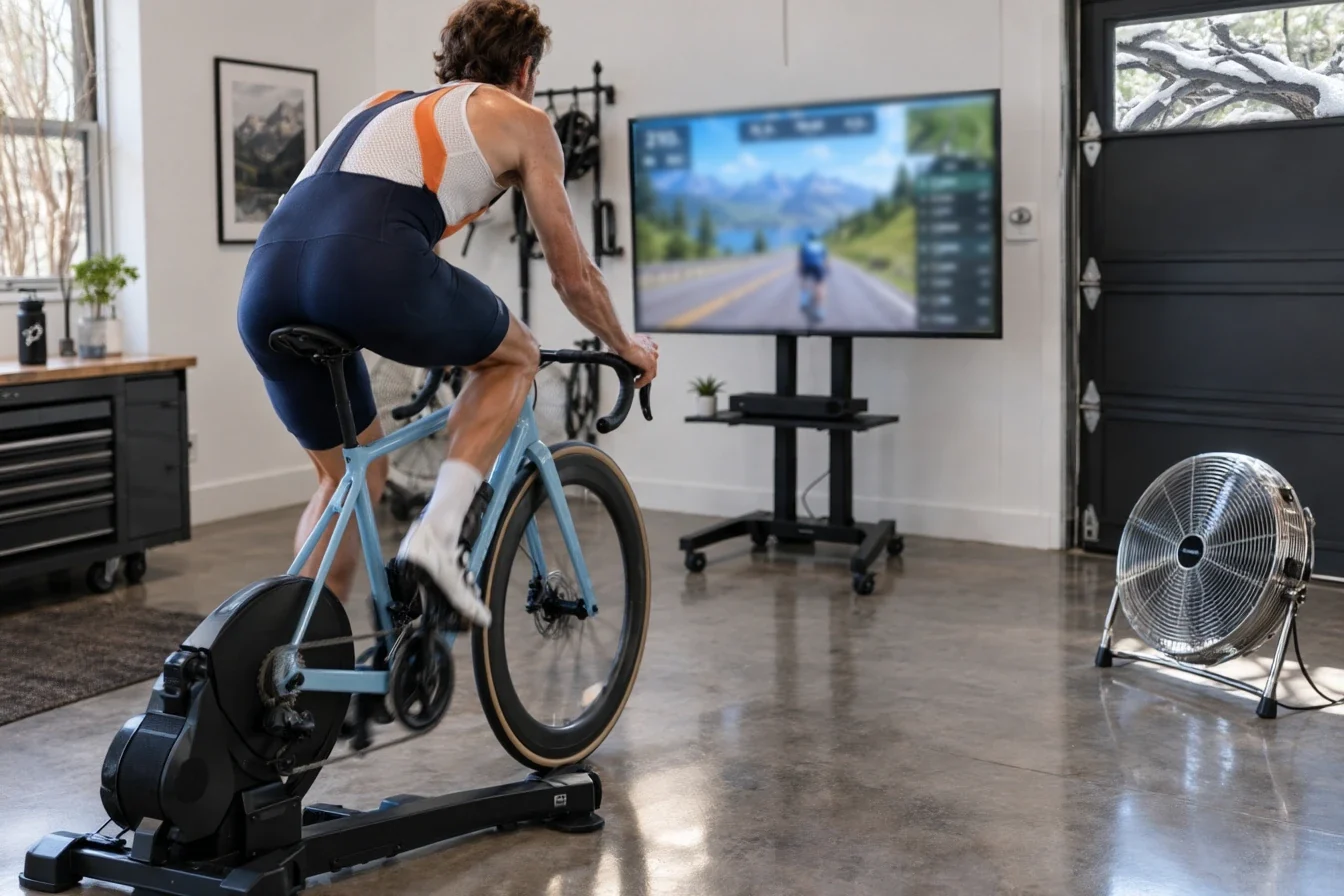
Indoors, an hour is a full workout: no coasting, no stoplights, no descending. One hour on the trainer is worth about ninety minutes outside. Use it for the precise work on weekdays and save the long rides for the road when you can.
- A fan, or two. Most of what feels hard about the trainer is heat.
- ERG mode for sweet spot and muscle tension intervals. Set the incline in the Companion app for the big gear work.
- Keep your FTP. If the trainer feels harder, fix cooling, setup and boredom, not the number.
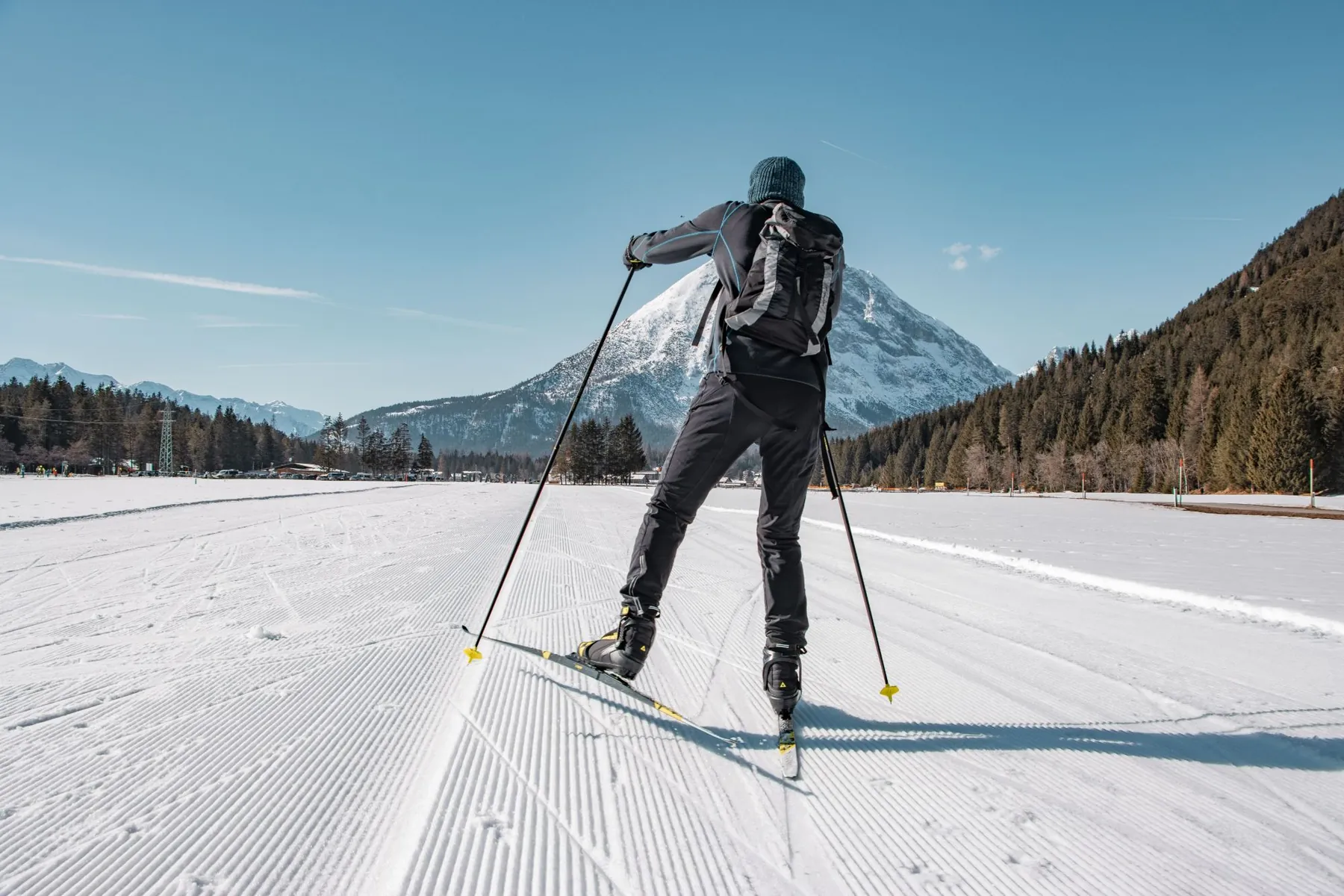
Snow, trails and skis count. Just keep them in the right weeks.
Cross country skiing, hiking, snowshoeing and trail running are good for the aerobic engine, good for bones that cycling never loads, and good for the head. Use them in the break, in the foundation weeks, and on easy days through the winter.
- Skiing and hiking can replace an endurance day one for one.
- Running adds impact your bones need. Start with 20 minutes. Calves and achilles need time.
- Do not replace the sweet spot days. Those are the ones that build the engine you will race on.
FasCat

A great workout a day late beats a bad workout on schedule.
Life will interrupt the plan. That is not failure, that is winter. The riders who arrive fit in spring are not the ones who never missed a day. They are the ones who never let one missed day become a missed month.
- Traveling: a hotel gym squat rack, or 30 minutes of split squats and step ups, keeps the gym block alive.
- Sick: pause before pushing. One bad decision turns a two day issue into a six week layoff.
- Need a mental break? Two or three easy rides, three to five hours a week. Do not stop for a month.
FasCat
The minimum effective winter
When the week falls apart, do not improvise. Drop to one of these and pick the full week back up when you can. Consistent hours you can recover from beat big weeks you can't.
| Week | Hours | What stays | What goes |
|---|---|---|---|
| Full week | 8–10 | Two or three sweet spot days, long ride, endurance ride, one lift. | Nothing. |
| Busy week | 5–6 | Two sweet spot hours on the trainer, one two hour weekend ride, one lift. | The endurance ride. The second long ride. |
| Survival week | 3 | Two one hour sweet spot sessions. Thirty minutes of squats or split squats. | Everything else, guilt included. |
Learn the trainer setup that makes winter bearable
- A fan pointed at your chest, and a second one if you can. Cooling is the biggest fix for "the trainer feels harder".
- A dedicated spot so the bike is ready. Setup friction kills consistency more than lack of motivation.
- ERG mode for intervals, free ride for the long days. Zwift group rides and the Climb Portal make long sweet spot rides go by.
- Short and dense. Trim an outdoor 90 minute session to 60 minutes indoors and keep the interval time.
- Morning if you can. The day cannot steal a workout that is already done.
The travel kit
- Shoes, pedals, kit, and a charged head unit or watch.
- A bodyweight strength routine written down: split squats, step ups, single leg bridges, wall sits.
- A pre booked spin studio, hotel bike, or a rental. Decide before you land.
- Permission to call it a recovery week if that is what it turns into.
Twenty years of winters in the Blue Ridge taught me that the plan on paper is not the plan. The plan is what you can do on a Tuesday in January when it is dark at five. Make that version small enough that you never skip it.Justin Bowes FasCat coach, two decades of coaching and racing gravel, road, MTB and cyclocross

Your winter checklist
Everything in this guide, as things you can tick off. Saved on this device.
Tick the box when it is done, not when it is planned.
Come back to this page through the winter. Your progress is remembered in this browser. The list is in the order the winter happens, so start at the top and let the finish line come to you.
- Before you start: the break and the three dates.
- Then the gym, then the base, with fueling and recovery running underneath both.
- Consistency items are the ones to check every week.
The winter checklist
Before you start
Weights, ten weeks
Sweet spot base, sixteen weeks
Fuel and recovery
Consistency, every week
Community

How to find people to train with
Learn why a crew is the most reliable piece of winter equipment you can own.
The hardest part of winter is not the workout. It is doing it alone.
Nobody skips a ride they promised someone else they would be at. Motivation comes and goes between November and March. An appointment with other people does not.
- An appointment beats an intention. A ride with a name, a day and a time gets done. "I'll ride this week" does not.
- Accountability is a person, not an app. One text the night before is worth more than any streak counter.
- Pace groups fix the two things that kill group rides: getting dropped, and getting bored.
 A winter crew, three rides a week

Find us in the Zwift Companion app
The winter group rides live in the FasCat Coaching Club, inside Zwift Companion, Zwift's free phone app. Join the club once and every ride is waiting for you under Club Events.
 Get Zwift Companion on your phone. It's free on the App Store and Google Play.
- 2Tap Clubs, search for FasCat Coaching and join the club.
- 3Open Club Events and sign up for the rides you want: Turnt Up Tuesday, Zone 2 Thursday and Sweet Spot Saturday.
Pick the ride that matches the day's job.
A group ride is only a problem when it replaces the wrong workout. Match the ride to the day and the group does the work for you: a long sweet spot ride on Saturday, conversational watts midweek, and one short spicy ride at most.
- Saturday long ride: sweet spot in a group. The kilojoules add up and the time flies.
- Midweek zone 2: a coach or a friend on the mic turns an hour of boredom into an hour of talking.
- One short, spicy ride a week keeps the top end alive. Two a week is a race season, and it is not race season.
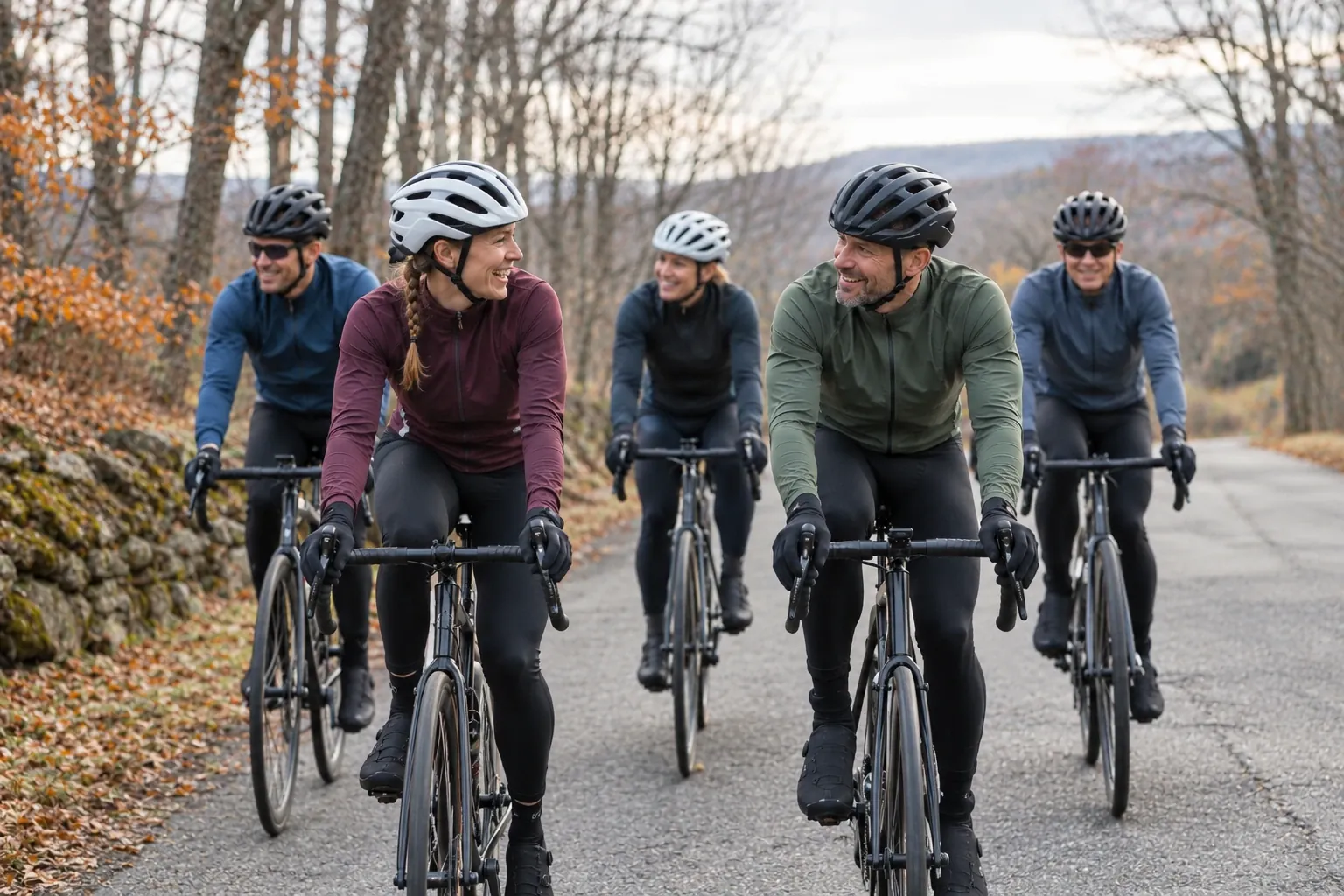 FasCat
You need one partner, one group, and one place to talk.
Start small. One person with a similar goal and a similar FTP is enough to change your winter. Add a weekly group ride for the long day, and somewhere to ask questions between rides.
- A training partner: same goal event, FTP within about 10 percent, and a standing day. Take turns picking the route.
- A group ride: the shop ride or club ride in winter is slower than in summer, which makes it perfect for base. Ask for the no-drop group.
- Indoors: join a Zwift club with scheduled rides and a voice channel, so the people are there even when the weather is not.
How to build your winter crew
You do not need a team. You need a few people who expect you to show up. Here are the options, what each one gives you, and what to watch for.
| Option | What it gives you | Watch out for |
|---|---|---|
| One training partner | The strongest accountability there is. A text the night before, a knock on the door. | Mismatched FTP. Pick someone within about 10 percent, or take turns setting the pace. |
| Local club or shop ride | Hours that fly by, routes you did not know, and a reason to be outside in January. | The group ride hero. Sit in on your base weeks and let someone else win the sign sprint. |
| Coach-led Zwift club ride | Pace groups by watts per kilo, so nobody gets dropped, and a coach on the mic calling the efforts and answering questions as you ride. | Treating every ride as a race. Join the ride whose job matches your day. |
| Online challenge or Strava club | A streak, a leaderboard, a little pressure from people you have never met. | Chasing volume for a leaderboard instead of the plan. Use it for consistency, not for intensity. |
| A camp or a trip | A date on the calendar that the whole winter builds toward, with people who are building toward it too. | Peaking for the camp. Arrive with base, not with form. |
Learn the four accountability rules
- Name the day. "Saturday 9am at the shop" survives a bad week. "Sometime this weekend" does not.
- Tell someone the night before. A partner, a group chat, a coach. Once it is said out loud, it is a plan.
- Show up even when you are not sure. Ride the first 20 minutes. Nobody has ever regretted the ride; plenty have regretted the couch.
- Protect the key days. The crew is there to help you do the plan, not to replace it. If the group's hard day lands on your base day, sit in.

I have raced for pro teams in Europe, and the winters I remember best are the Knoxville ones: the same four or five people at the same gas station every Saturday, whatever the weather. Having people waiting for you is a better training tool than any power meter.Stephen Bassett FasCat coach, 2024 US criterium national champion
Now go do it.
That is the whole winter. Weights first, then base, fuel the work, sleep, and keep showing up on the unremarkable days. Do that and April will take care of spring and summer.
The easiest way to follow this guide Start your free week of CoachCat CoachCat builds your custom plan, and everything from this guide is included. 7 days free, no credit card. Start freeKnow a rider who needs this winter plan?
© 2026 FasCat Coaching. All rights reserved.