
Winter Training Guide
How to spend the winter so next summer takes care of itself.
- Why winter matters
- Lifting for cyclists
- Sweet spot base
- Winter mistakes
- Fuel and recover
- Staying consistent
- Winter checklist
- Training partners

How I Invented Sweet Spot Training
Did you know that I invented sweet spot training nearly 20 years ago? That's right. Back in 2004, while I was training for the Colorado State Time Trail, I was also working with a group of coaches and sport scientists on a brand new top secret power-based performance model. The same one that would become the performance manager chart inside Training Peaks and WKO.
We were using our own power data to test the model and to answer the question, does this model predict performance? And what happened next changed training forever. It led to the invention of sweet spot training, the creation of the performance manager chart and training peaks, and the beginning of modern power-based sport science training as we know it. And today, I'm going to tell you the real story of how I invented sweet spot training and simultaneously validated the modern-day performance manager chart.
And if you watch until the end, I'll show you how to get the very same sweet spot training plans that I'm about to tell you about for free. What's up everyone? I'm Coach Frank Overton. Some call me the big cat and I'm the founder of Fast Cat Coaching and creator of the Coach Cat app.
Before I get into the story, drop a comment below and tell me, has Sweet Spot Training helped you ride faster or not? Let's flash back to 2004. I was at the USA Cycling Coaches Conference at the Olympic Training Center in Colorado Springs where I met the one and only Dr. Andy Kagan.
He presented a power-based impulse response model with a complicated algorithm and a graph showing how training stress creates both fitness and fatigue. Most coaches nodded politely and moved on, but I saw the usefulness of what Andy presented. And that night, I emailed him and I asked if I could use his model. A few hours later, an Excel spreadsheet arrived in my inbox with complicated macros and rows and rows of blank columns.
I honestly didn't really know what to do with it. But the following week after the conference, Andy formed a private invitationonly beta group. About a dozen of us, coaches, scientists, and early adopters of powerbased training. It was called EWTSS for exponentially weighted training stress score.
I dubbed it the that will kill them. TSTW KT TISK wicket, which was an an acronym for Lance Armstrong's secret high-tech aerodynamic equipment that he was using to get edge on his competitors. We called it Tisk Wicket because we knew this model was going to be something big. And the beta group was challenged with figuring out how to prove from real performance data that the model could predict performance.
So every day we rode and we uploaded our power files and we fed the data into the model and slowly a pattern started to emerge. There was a relationship between fitness and fatigue and the possibility of a spot which could balance both which is where sweet spot enters the story and I'll get to that in a minute. But first, at the time I wasn't just a coach, I was a new stay-at-home dad. My wife was a teacher and when she got home at 3, I had a limited amount of time to train before dark.
This was all pre-Ziff, so I'd roll out of the driveway and start riding sub threshold right away to stay warm and mostly because I didn't have hours to sit in zone two. When I started to fatigue, I'd let my watts fall into tempo. And when I got more tired, I'd finish in zone two. Wasn't fancy, and I didn't waste time with intervals.
The entire ride was one interval between a seven and nine on a 10point RP scale. Back home, I plug my SRM into the computer. I'd get a TSS from WKO and I would take that number and I'd enter it into Andy's Excel spreadsheet and watch its effects on CTL, ATL, and TSB. What I noticed was that I could generate a decentsized TSS in two hours by riding between high zone 2 and low threshold to increase my CTL and that I could do it again the next day and the next.
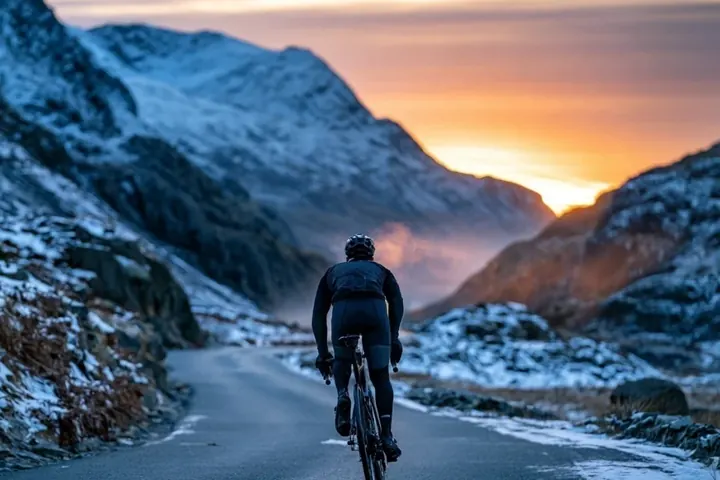
And those late afternoon sessions became legendary. We called them Gatorade slushy rides. 25 to 30° bottles starting to freeze, sun disappearing behind the mountains. I would come home tired but not destroyed. And by the next day, I was recovered enough to do it all over again.
And I repeated this training technique day after day, all winter long, using this new power-based impulse response model. And for the first time ever, we could see training quantified not just in watts and an FTP, but in training load, a measure of one's fitness. Speaking of fitness, by June of 2005, mine was through the roof. from sweet spotting up the wazoo as some of you may have heard me call it. Using the model, I increased my CTL from 60 to 120 and then I used the model to design a twoe taper where my TSB was predicted to be in the 30s.
I secondgued all the rest I took during those two weeks, but I trusted the model and on race day it paid off. During the daytime trial, my numbers were so high I thought my SRM was broken. 370s, 380s. These are numbers I hadn't seen all year long. I was like, am I going too hard?
But it didn't feel too hard. And actually, I felt really, really good. So, I kept going. And at the end of the 37K state trial championship, I clocked a 350 watt sub48 minute time trial.
Good enough for third place behind pro rider Scott Moniker. This was a true physiological peak and to this day remains the best rod of my career. The Monday after the time trial in the beta group, we dove into the numbers and the training that produced such a peak. Upon further analysis, all those Gatorade slushy rods were conducted between guess what? 84 and 97% of my FTP.
And I use that staller training to increase my CTL from 60 to 120. So, we discussed the relationship between the training benefit and the physiological strain of that training. And shortly after, Andy sent back a simple visual with two curves, one of the training effect and the other of the physiological strain, both drawn out on the x-axis of zones 1 through 7 and the yaxis of a maximum training benefit. And at the intersection of training benefit and strain, we drew a circle.
And that was high zone 2, low zone 4, between 84 and 97% of FTP. I called the circle sweet spot, a balanced amount of intensity and strain that produced an increase in FTP and endurance. This was the zone that gave more bang for the buck and thus the designation sweet spot. That was the aha light bulb moment when Sweet Spot was born to describe all those freestyle Gatorade slushy Sweet Spot sessions that I used to peak for the Colorado State Tom Trail.
Now, we had the proven race performance. We had the power data from it. We had the model showing how it had all been achieved. And now the type of train used to achieve that performance.
And thus, my fellow fast cats is how SweetSpot was born. A few weeks later, a young and upcoming category three rider that I coached by the name of Tom Zerbal got fourth at the US Pro Tomtra Championships using the very same sweet spot training methodology. As a side story, Tom had to ask for his tattoo upgrade when the CEO of USA Cycling handed him his fourth place medal at the podium presentation. But the next year, I coached the Priority Health Pro Men's road cycling team, and the Sweet Spot winning ways continued with the likes of Ted King, our very own coach Jake Ryeski, guys like Eddie Hillier.
Those guys grown when they saw 3 hours of Sweet Spot on their training plan, but boy did they sure cheer loudly from the top of the podium. By the summer of 2005, after months of testing the state trial championships and validating the model privately, it was time to share a Sweet Spot with the world. I wrote a training tip for Pez Cycling News, the first public article ever explaining sweet spot training, and that became its worldwide release. Up until that point, everything we were doing inside the beta group was completely private.
The performance manager chart didn't exist publicly. It wasn't even live in WKO yet. and no one outside our circle had seen what we were building. In that piece, we revealed the concept, the physiological reasoning, the intensity range, and how riders could build more base in less time. I called it sweet spot advanced aerobic endurance training because that's what it was, an evolution of traditional zone 2 base training.
I'll put the link to the OG training tip in the description. And at first, the idea flew under the radar, but quietly coaches started trying it. athletes began seeing breakthroughs and the results spoke louder than any explanation could. And here's something important. I never really tried to trademark sweet spot or keep it proprietary.
I come from an academic background where the goal is to share knowledge and collaborate for the go to the sport, not lock it up and charge people for it. So, credit absolutely goes to where it's Dr. Andy Coggin who built the model and drew the curve that visualized how our legs fell and the EWTSS beta group who tested it relentlessly and every athlete who proved it in realworld racing. I may have named Sweet Spot, but we all invented it together.
Over the years, SweetSpot has faced a lot of criticism, especially from the Zone 2 purists, and that's fine. Debate pushes the science and the sport forward. But through it all, I've stayed loyal to the data, the results, and the real world performance. And time has a way of validating good ideas.
Because just this year, UAE team coach Jerome Swart explained on GCN that the training intensity they rely on is what he called the sweet spot. Essentially, the same balanced training load we identified two decades ago. Today's sweet spot training matters more than ever, especially for time crunched athletes just like I was and still am on those Gatorade slushy rides. If you train 10 hours a week or less, Sweet Spot isn't just an option.
It's the most efficient way to build real aerobic power. Zone 2 alone simply doesn't provide enough stimulus unless you have prolevel hours to invest, which is where I came up with the expression, ain't got time for that. That's why SweetSpot has become the cornerstone of the Fast Cat coaching and the foundation of the Coach Cat app today. It's proven, it's practical, it works in the real world, whether you're a world tour rider or working parent squeezing training between life's responsibilities.
Because this entire story began with sharing knowledge, I want to pass it forward. So, I'm giving you free access for one month to all our sweet spot training plans that I designed and have refined over the past 20 years. These plans use the same approach I used back in 2005 and the same method that's helped thousands of time crunched cyclists get faster on limited hours. Just click the link below in the description, start your free month and experience for yourself how balancing intensity and recovery can transform your fitness just like it did for me and for the athletes I've coached for the past 20 years.
I'm Coach Frank Overton. Thanks for watching and until the next video, you know what to do. Work hard, ride fast, have fun, and as always, FTF P.
Sweet Spot Training is one of the most widely used and effective ways cyclists build their base and improve power. Sweet Spot Train the Right Way for FREE in the CoachCat App → /app
But very few people know the story behind the development of 'sweet spot training'.
In this video, I (Coach Frank) share, the true origin story of Sweet Spot Training: how I invented it in 2004 while training for the Colorado State Time Trial Championships, and how it grew out of a top-secret power-based performance model that eventually became the Performance Manager Chart inside TrainingPeaks and WKO.
You’ll hear how the idea emerged from real training data, how we validated it inside the original E-W TSS beta group with Dr. Andy Coggan, and how Sweet Spot helped me hit the best race of my career. You’ll also learn how this approach went on to shape modern power-based training and elite performance today.
👉 Watch until the end to get access to FREE Sweet Spot Training Plans — the same method I used to peak in 2005, and the same strategy used by thousands of time-crunched cyclists riding 6–10 hours per week. 00:00 Introduction 01:14 Dr. Andy Coggan 03:02 FreStyle Sweet Spot Training 04:43 Peaking at the State TT 05:48 The Eureka Moment 07:26 Athlete Proof 08:09 the Worldwide Release 09:49 Twenty Years Later 11:06 Free Sweet Spot Training
This tip is part of the FasCat sweet spot training guide, the complete resource from the coach who invented it. Ready to put it into practice? See our sweet spot training plans in the CoachCat app.