Zone 4, 5, & 6 Intervals: How to Go Full Gas for More Watts
Are you actually going hard enough during your intervals?
For many cyclists, especially Masters athletes balancing limited training time, the difference between plateauing and improving often comes down to how effectively high-intensity intervals are executed.
In this video, FasCat Coach Frank Overton breaks down how to go “full gas” during Zone 4, Zone 5, and Zone 6 intervals to maximize power output, improve VO2 max, and develop real-world race fitness.
Why “Full Gas” Intervals Matter for Masters Cyclists
Structured interval training is one of the most effective ways for Masters cyclists to build fitness efficiently. But not all intervals are created equal.
Zones 4, 5, and 6 are where performance gains happen:
- Zone 4 (Threshold): Improves sustained power and FTP
- Zone 5 (VO2 Max): Increases aerobic capacity and oxygen uptake
- Zone 6 (Anaerobic): Builds top-end power and repeatability
The key is not just completing these intervals, but executing them at the highest quality possible.
That’s where “full gas” comes in.
What “Full Gas” Actually Means
“Full gas” does not mean going all-out and blowing up halfway through a workout.
Instead, it means finding the highest sustainable intensity where every interval is completed at a high level.
The goal is consistency across efforts:
- Interval one should not be dramatically stronger than interval four
- Power output should stay steady across all repetitions
- The final interval should feel like a maximal effort, but still controlled
This is where pacing becomes a skill, not just a number on your head unit.
Why ERG Mode Is Holding You Back
Many cyclists rely on ERG mode during indoor training, letting the trainer dictate power output.
Coach Frank argues this approach limits performance development.
When ERG mode controls the effort:
- Athletes don’t learn pacing
- There is no connection to perceived exertion
- Race-day instincts are underdeveloped
Turning ERG mode off forces cyclists to:
- Control effort manually
- Learn what each training zone feels like
- Develop the ability to respond to real-world race scenarios
For Masters cyclists, this is especially important. With fewer training hours available, every session needs to build both physiology and skill.
Train Outside When Possible
Whenever possible, these intervals should be done outdoors.
Riding outside naturally encourages higher power output and better engagement. Climbs, in particular, are ideal for interval work:
- Uphill gradients promote higher wattage
- Descents create built-in recovery
- Efforts feel more dynamic and less monotonous
The result is often stronger intervals and better training adaptations.
The 3 Best Zone 4, 5 & 6 Interval Workouts
These are the core workouts Coach Frank prescribes to both professional and Masters athletes. They are simple, repeatable, and highly effective.
Zone 4: Threshold Intervals
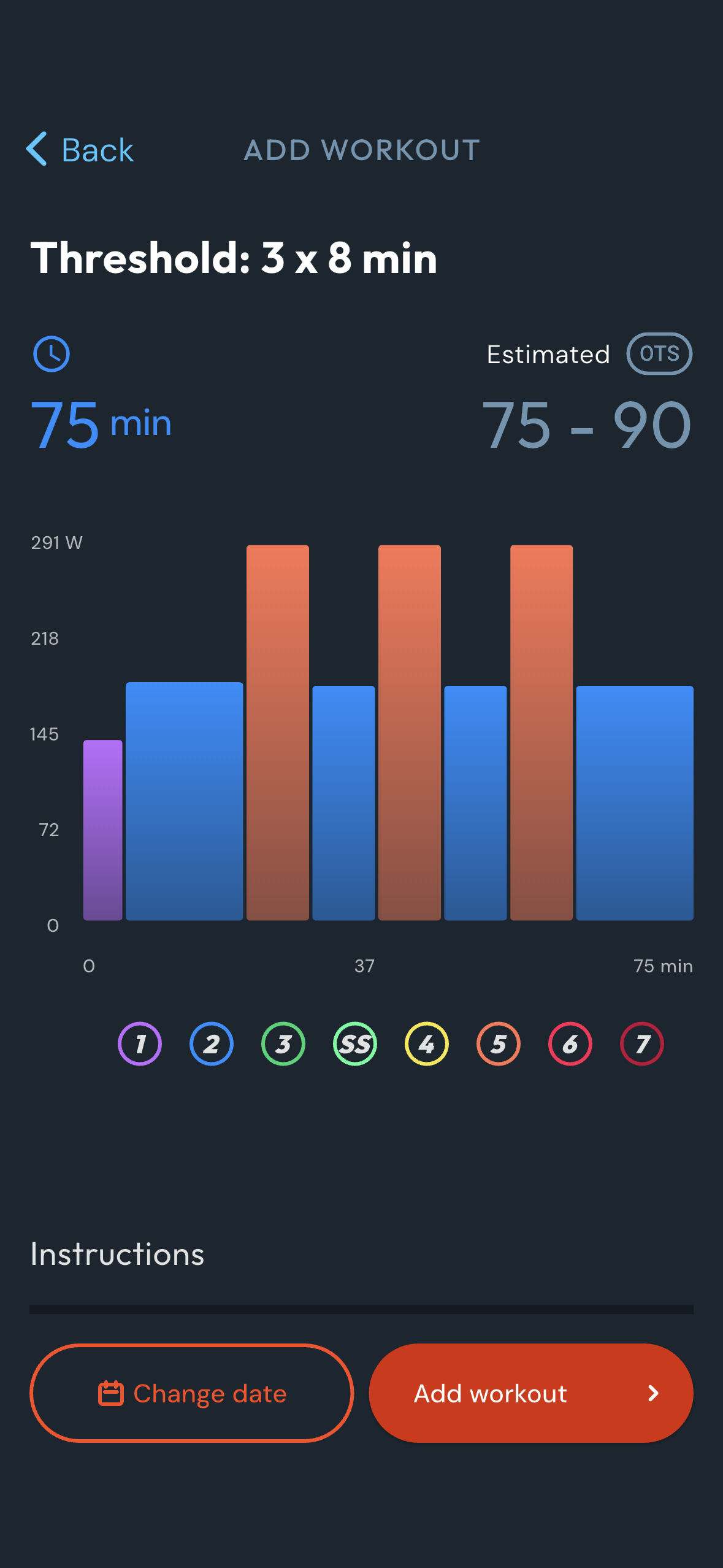
Workout:
3 x 8 minutes ON, 4 minutes rest
Target intensity: 103–110% of FTP (supra-threshold)
Total work: 24 minutes
Rather than riding at traditional FTP, athletes are encouraged to push slightly above threshold while maintaining consistency across all three intervals.
Zone 5: VO2 Max Intervals
Workout:
2 sets of 2 x 3 minutes ON, 3 minutes rest
6 minutes recovery between sets
Target intensity: 106–120% of FTP
Total work: 12 minutes
Proper pacing is critical. The first minute should feel manageable, the second challenging, and the final minute extremely difficult.
Zone 6: Anaerobic Capacity Intervals
Workout:
2 sets of 3 x 1 minute ON, 1 minute rest
5 minutes recovery between sets
Target intensity: 120%+ of FTP
Total work: 6 minutes
These efforts are designed to push maximal power output. The goal is to maintain similar power across all six intervals, not spike early and fade.
Where These Workouts Fit in Your Training Plan
High-intensity interval sessions should be placed strategically within a training plan.
To get the most out of Zone 4, 5, and 6 workouts:
- Perform them when fresh, ideally after a rest day
- Avoid stacking them with other hard sessions
- Allow adequate recovery afterward
For Masters cyclists, recovery is just as important as execution. Proper placement ensures each session delivers maximum adaptation.
Train Smarter, Not Just Harder
Going “full gas” is not about suffering for the sake of it. It’s about learning how to apply effort with precision.
By turning off ERG mode, focusing on pacing, and executing proven interval workouts, cyclists can:
- Increase power output
- Improve VO2 max
- Develop race-ready fitness
In the video above, FasCat Coach Frank Overton walks through exactly how to apply these principles in your own training.
Take the Guesswork Out of Your Training
For athletes who want these workouts built into a structured plan, the CoachCat app prescribes intervals at the right time, sets appropriate targets, and analyzes performance after each ride.