

The Annual Training Plan:
All 7 Phases Explained
If you stop training after your race season, by firing your coach or ditching your training plan, you are setting yourself up to plateau next year. An Annual Training Plan is the fix: a full year approach that keeps you progressing through all 12 months, from a fall foundation and weights through base training in the off season to intervals and event specific prep in the spring. Whether you're racing, training for a big gravel ride, or you just want to crush the group ride, this is the structure that works. Below is exactly how Coach Frank builds it for FasCat athletes every season, and how to time it around your goals.
Key takeaways
- Take a two week post season break, not six. Six weeks costs you the adaptations you spent all year building.
- Three dates anchor the year: when you want to be fast, when base starts, when weights start.
- The full plan is 46 of 52 weeks, leaving six weeks of slack for travel, illness, and life.
- The 10 week weight block is the phase most athletes skip and the one that most reliably separates a breakthrough season from a flat one.
- You can build your Annual Training Plan inside the CoachCat app.
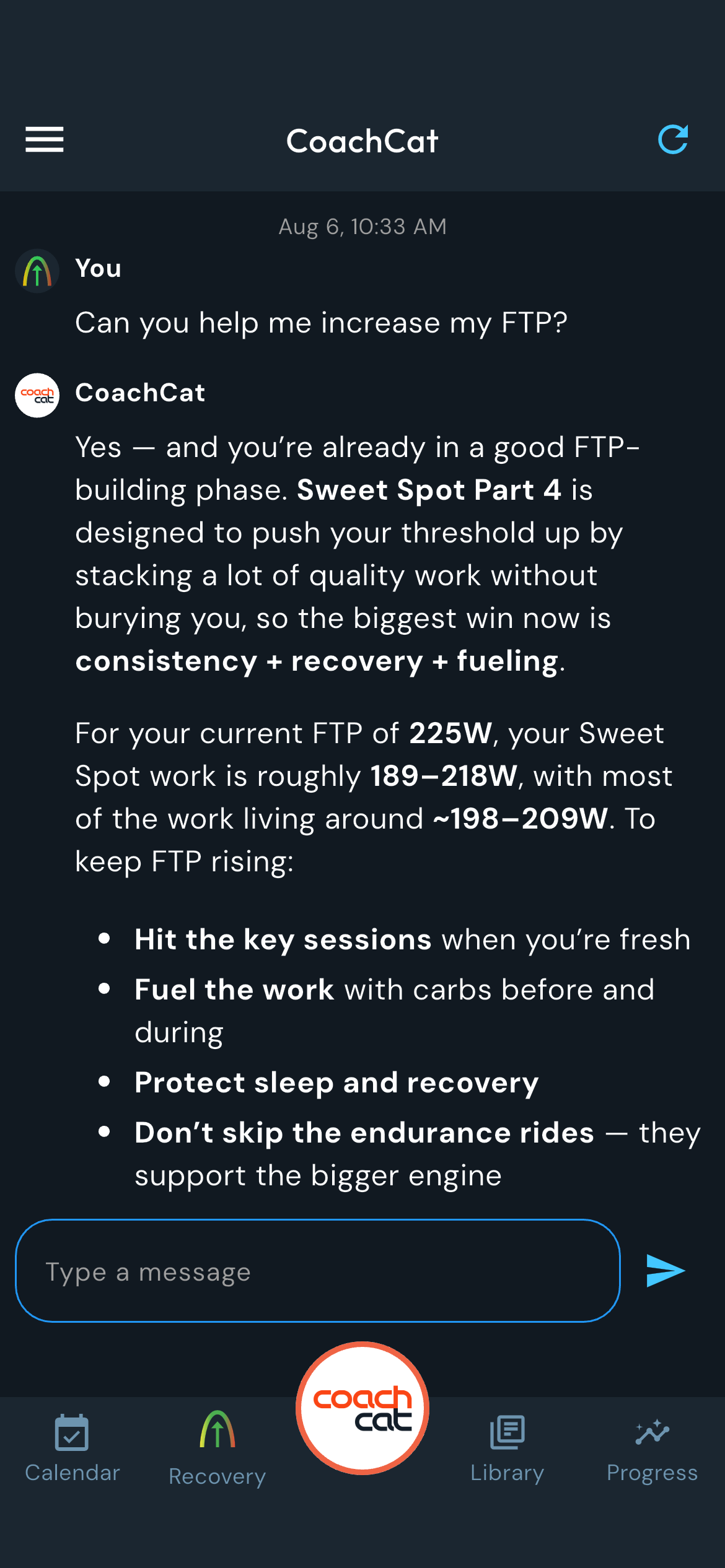
At FasCat we have found that the most successful athletes do not just train hard for a few months. They train year round, moving from one phase to the next with structure and purpose, without burning out or getting bored. Follow it and you do not just maintain fitness. You make real breakthroughs past where you were this season. As an illustration, if your FTP was 240 watts this year, this approach is how you show up next spring pushing 260, 275, or more.
I am Coach Frank, and this is the exact approach I used to go from Cat 5 to pro back in my day. It is the same approach I used this past year to get third at SBT GRVL. And it is the same strategy I have refined over 20 years of coaching everyday cyclists with careers, kids, mortgages, and, well, life. In other words, athletes without a lot of time to train. On average about 6 to 8 hours per week. The magic that turns those hours into 5 to 10 percent gains year after year is a consistent, periodized approach.
What a Proper Annual Training Plan Includes
Contrary to a lot of what you will read on the internet, structured training does not mean doing intervals week after week, 365 days a year. A proper Annual Training Plan includes a post season break, a fall foundation, cross training, weightlifting, and base building, all timed together for peak power output next spring and summer. It crescendos from chill, methodical work to more and more rigorous training as your goal events approach. It is focused. And if you commit to it, it works.
The 3 Dates That Anchor Your Year
Everything starts with three dates on your calendar, and you find them by working backwards.
- When you want to be fast next season. Your A event, or if you are not racing, the date you want to be fit.
- When you start building base. Determined by date one.
- When you start lifting weights. Determined by date two.
Work backwards from there and you have your answer for when to take your two week post season break. Each phase flows into the next.
Do not take a six week break. Especially as a masters cyclist.
Take six weeks off and you lose a lot of the adaptations you spent all year building. All that hard work flushed right out the toilet. You will spend half of next year just getting back to where you already were this year.
Take two weeks instead. You get the full benefit of the break and you keep everything you earned this season.
The 46 Week Calendar
Each solid block is one of the seven phases, and the number on it is that phase's length in weeks. Colour tracks intensity: dark is rest and aerobic work, orange is race sharpness. Hover any block.
46 of 52 weeks. The remaining six are yours. Fill them with a phase you want to work on, or a race and recover block if you are competing week to week. Or leave them as slack for the business trip, the head cold, the week that goes sideways. That built in margin is the point. It is what separates a plan you actually finish from one you abandon in February.
How Your Fitness Climbs Across the Year
Same 46 weeks, seen a different way: as training load. Each phase adds fitness, the rest weeks let you rebound higher than before, and it all builds to a single peak at your A event. The coloured bar along the bottom shows how many weeks each phase lasts.
Post Season Break
After your last big event, take two full weeks off the bike. This is not a taper. It is not easy spins. It is not chill rides. This is a real mental and physical break.
Think of it like deep cleaning the blackboard at the end of the school day. You come back fresher, more motivated, and ready to build for the next 50 weeks.
Fall Foundation
This is where you ease back in. No FTP test. You will do some muscle tension work and ride consistently, reconnecting with why you love the bike. Cross training. Fall foliage rides. This phase lays the groundwork for prepping your legs to enter the weight room.
Cycling Specific Weightlifting
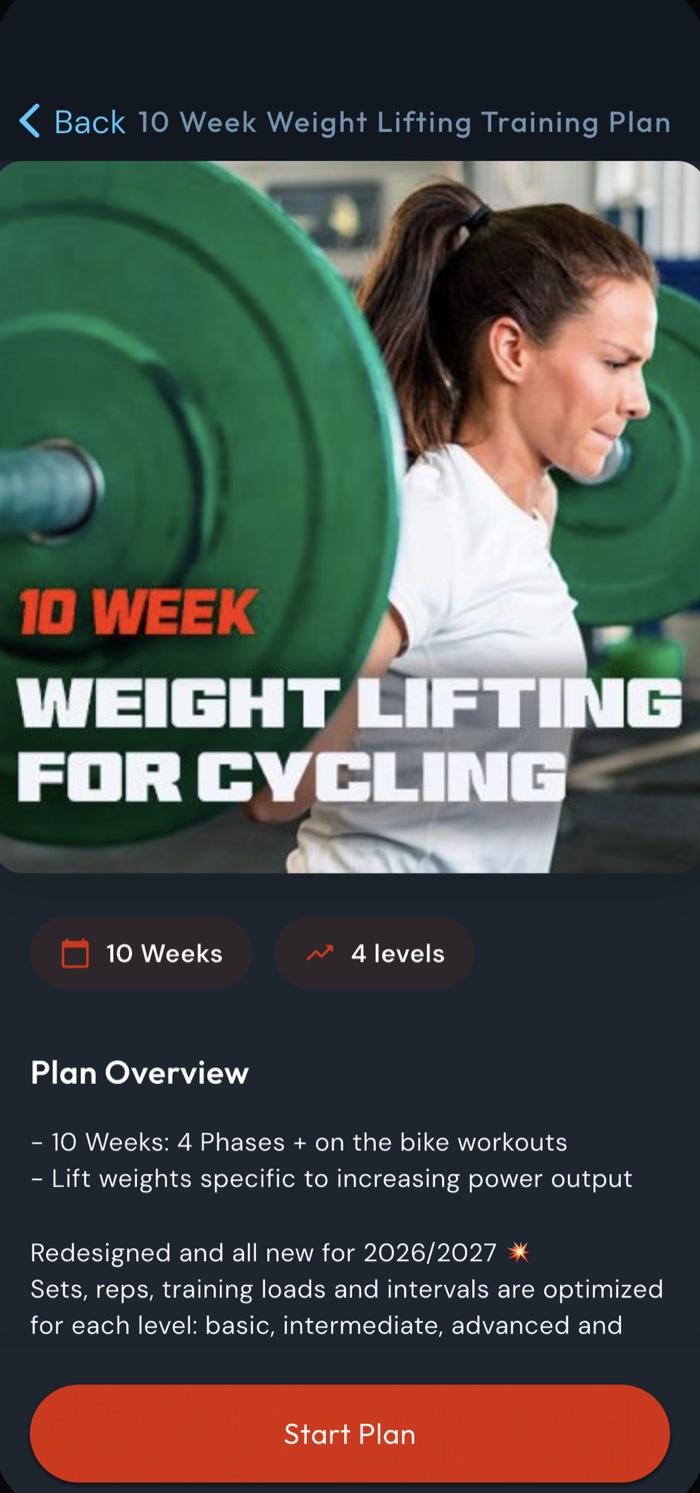
This is your secret weapon. The athletes who complete a 10 week cycling specific resistance training plan are the ones who go on to absolutely exceed their expectations the following season.
- AdaptationYou learn how to lift and teach your body to avoid injury.
- HypertrophyYou build lean muscle mass that will go on to produce power.
- StrengthYou teach that new muscle how to produce great force.
- PowerYou convert that force into watts on the bike.
Sweet Spot Base
This is where you build your aerobic engine. We use Sweet Spot training here because it gives you the most bang for your buck, especially on 6 to 8 hours a week. Like we say: you ain't got time for that Zone 2.
You will build your aerobic base, increase mitochondrial density, and lay down fitness that lasts. We like to see athletes gain 5 to 10 Levels per four week block during this phase.
Intervals: Switching From Base to Race
You are going from pyramidal Sweet Spot style training to polarized, high intensity, fresh intervals.
- Threshold2x20s, 3x5s
- VO2 max3, 4 and 5 minute efforts, including the legendary 3-4-5 progression
- Anaerobic1 minute efforts and 30 second efforts
Group Ride and Race Specific Prep
We are big fans of group ride training. They are fun, and when done properly they are incredible training. Use them to practice tactics and sharpen your pack riding skills.
But the holy grail of group ride training is this: the group pushes you harder than you can push yourself. That extrinsic motivation, wanting to beat your friends, gets you digging deeper than you would ever trick yourself into digging alone on an interval day.
Structure: one structured workout per week, one to two group rides, and a longer aerobic ride on the weekend.
Taper and Peak
If everything has gone to plan, you have two weeks left to taper into your A event and show up at your sharpest.
Working Backwards From Your A Events
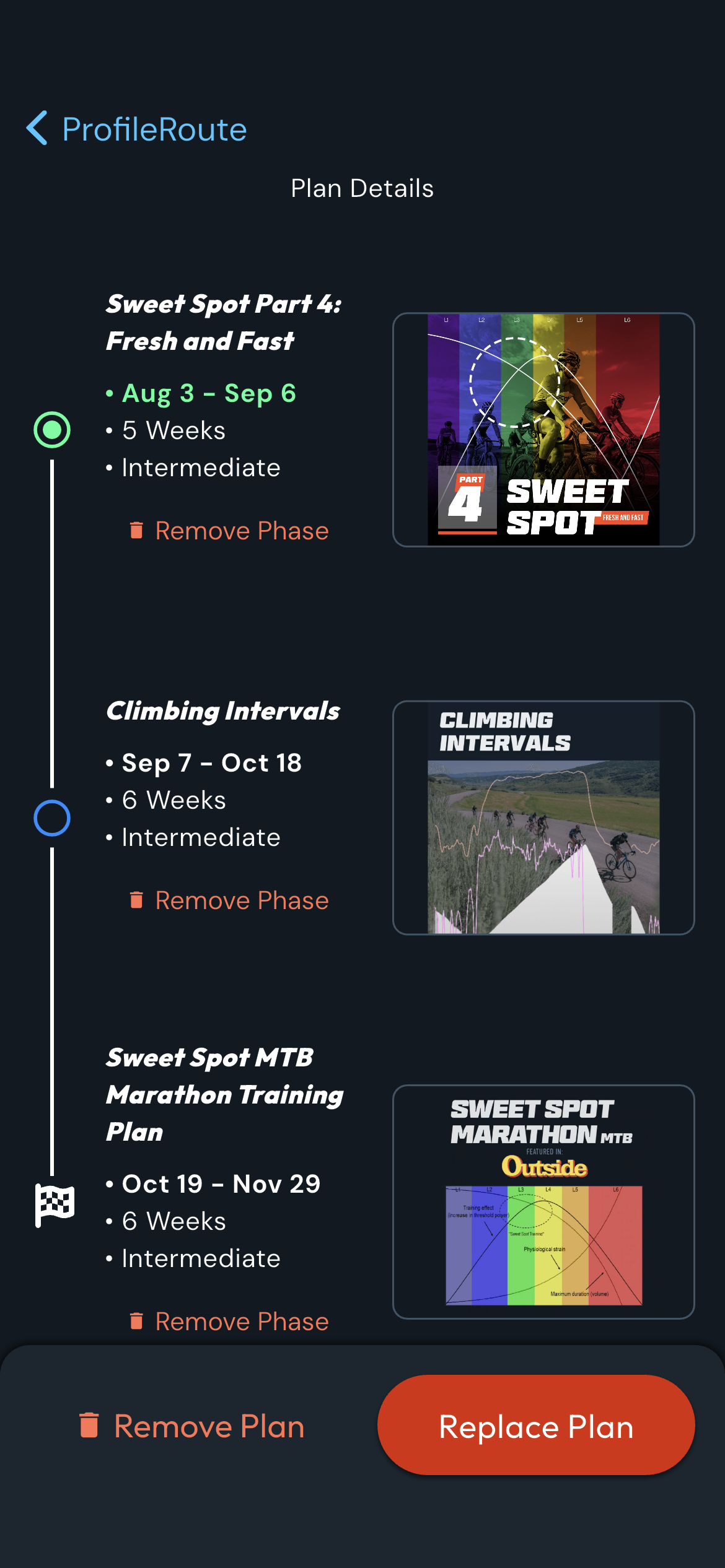
Put the events on your calendar and work backwards from your known A races. Not racing? Train for fitness instead and pick a date anyway:
- The start of your group ride season
- When the weather turns good where you live
- When you plan to do your big rides
- A cycling trip you have booked
- Even a Strava PR or KOM you want to take a swing at
Use that as your A event and work backwards from it. The framework does not care whether you pin on a number. Or skip the math entirely and let CoachCat do it for you: tap Build a Custom Plan in the app, on mobile or desktop, and it maps your whole year around your A event.
What to Do When Life Happens
Here is the part most training plans ignore. You are going to miss workouts. You are going to get sick. You are going to travel for work. Even professional riders deal with this.
This is exactly why having an Annual Training Plan matters. It gives you a framework to return to when life punches you in the face. You do not rework the whole thing. You move the start dates of the phases. Inside the CoachCat app you can just ask the AI directly:
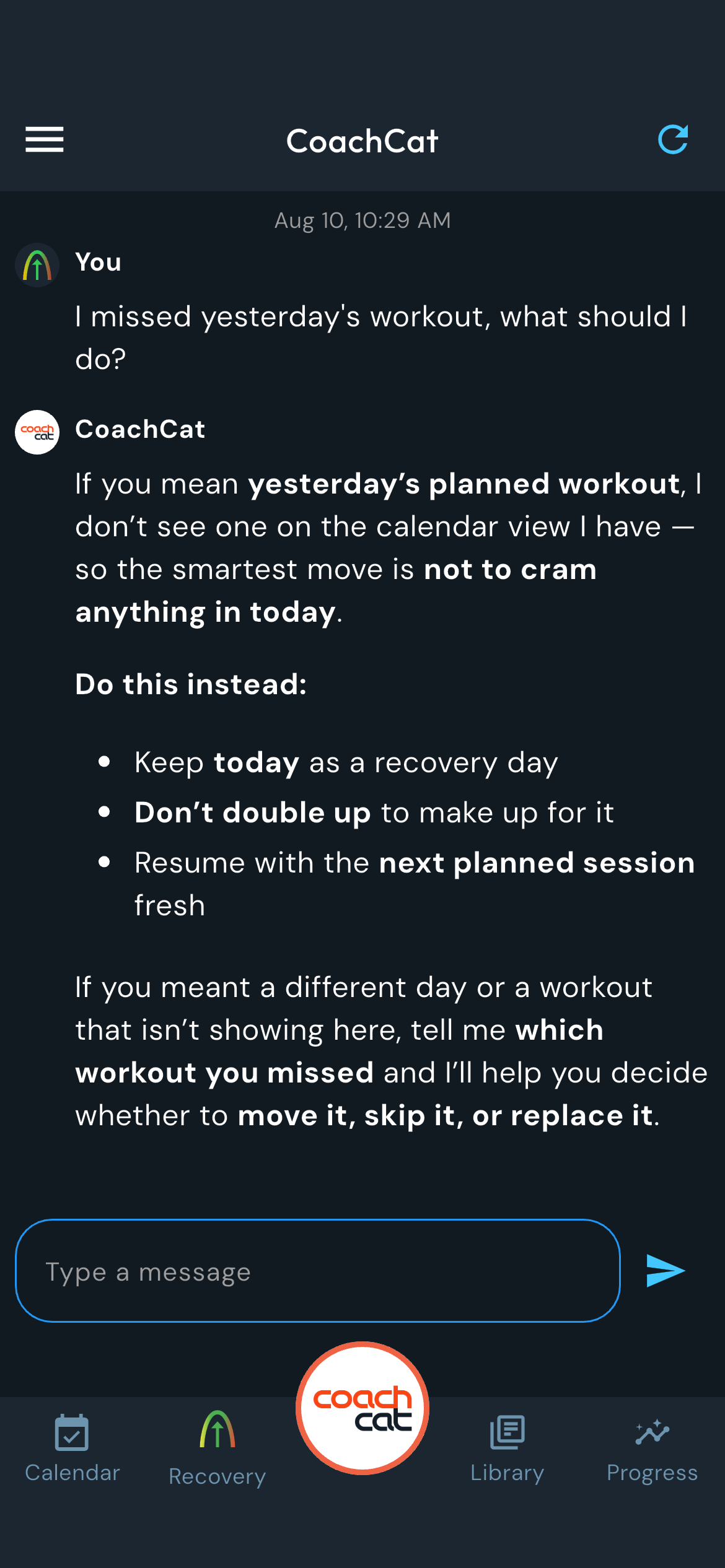
You get real feedback on how to adjust, and CoachCat revises your plan in real time so you stay on track within the bigger Annual Training Plan picture. That is the real benefit of an Annual Training Plan. It is smart coaching that evolves with your life. Think of the Annual Training Plan as your road map and the day to day calendar as the details you execute on.
Annual Training Plan FAQ
Do I have to race to use an Annual Training Plan?
No. It is phenomenal for just getting fit for next year, whether that is for your group rides, your fondos, or your big summer trips. Pick the date you want to be fit and work backwards from it the same way a racer would.
What if I'm reading this late in the season?
Pick up at the phase that matches where you are now. Reach out and we will help you figure out which one that is.
Do I need a power meter to follow an Annual Training Plan?
No. You can follow this plan with or without one. Heart rate based training works, and so does going by feel.
Can I do this training plan indoors?
Yes. Indoors, outdoors, or a mix depending on your weather, your schedule, and your preference.
How long should the off season weightlifting phase be?
Ten weeks, moving through adaptation, hypertrophy, strength, and power. This is the phase most athletes try to skip or compress, and it is the one that most reliably separates a breakthrough season from a flat one. Start it in the fall and you will have time. Wait until January and you will not.
When should I take my post season break?
Right after your last A event of the season, for two weeks. Work backwards from when you want to be fast next year to confirm the timing lines up with your base and weightlifting start dates.
Build your Annual Training Plan.
No credit card required. Cancel any time.
Start your free week →